

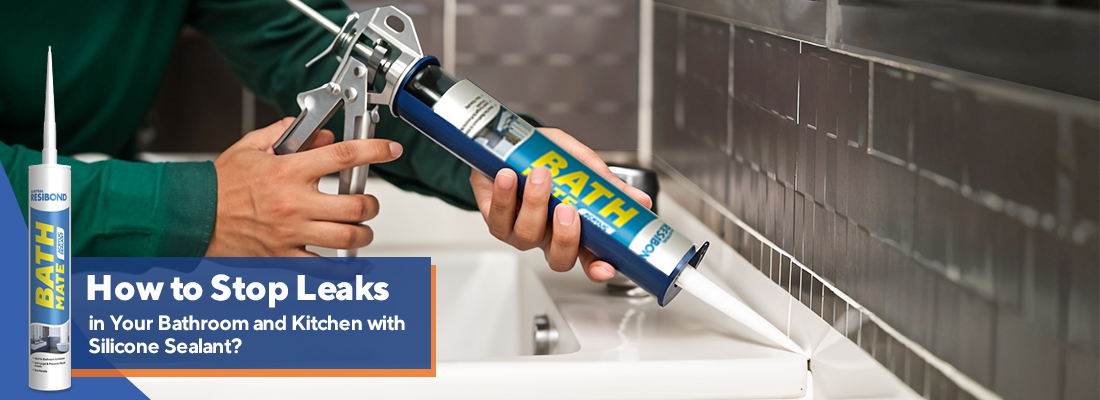
How to Stop Leaks in Your Bathroom and Kitchen with Silicone Sealant?
That annoying drip from your bathroom tap is more than just a minor irritation. These small leaks can turn into expensive repairs and some of your unwanted headaches if left unchecked.
Believe us, you do not need to call an expensive plumber for every small leak. With the right water resistant glue, like silicone sealant, you can fix some seepage issues yourself. An effective waterproof sealant for bathroom and kitchen applications has become a go-to choice for such problems.
You could be dealing with loose tiles around your shower area or water seeping behind your kitchen counter. Just make sure to understand how to properly use a water resistant silicone sealant, which can save you money and stress.
What are Some Common Causes of Bathroom Leaks?
Bathroom leaks are a common issue in Indian homes, particularly in cities where bathrooms are compact and used frequently. Some of the main reasons for the leaks are:
- Many times, cracks appear between bathroom tiles, especially around shower areas. These cracks let water slowly seep underneath and cause damp patches on the walls.
- Washbasins and faucets are usually fixed to walls using some type of grout or adhesive. Over time, this material becomes weak due to constant water flow. This can also lead to small gaps and leaks.
- Standing water near showers, especially when the bathroom floor does not have the right slope, often collects around drains and corners. The pooled water causes damage to the joints and spreads leakage.
- Toilets and bathtubs can also be a source of leakage if the fittings are not sealed properly. Water can seep into the tile grout and slowly cause unseen damage.
- Another common issue is the thin line of sealant around shower glass doors or mirrors that loses strength over time. This allows water to escape outside the shower zone and causes slippery floors.
What are Some Common Causes of Kitchen Leaks?
Kitchens may look dry most of the time but the amount of water used for washing, cooking and cleaning actually creates many weak points for leakage:
- The most common are the gaps around kitchen sinks and countertops. The constant scrubbing, exposure to detergent and also the heavy utensils, all cause wear and tear. This often breaks the seal.
- Many Indian homes now have dishwashers, RO water purifiers and also appliances like washing machines fitted inside or around the kitchen. So even a loose joint can become a source of leakage over time.
- Under-sink cabinets are particularly vulnerable because any unnoticed dripping from small pipes or taps slowly damages the wood. It can even attract pests like cockroaches.
- Tile grout near wet areas like sinks or dishwashing zones weakens quickly. Once cracked, it allows water to seep under surfaces and create a damp smell that is hard to remove.
- In some older kitchens, water from cleaning spills near the gas stove seeps through the counter slabs due to weak sealing at the junction points.
What is Silicone Sealant and How Does It Work?
Silicone sealant is a special product trusted worldwide. It remains flexible like rubber after drying. This is important because it can expand and contract with changing temperatures and still provide a strong waterproof layer.
It can be used as a waterproof glue for bathroom because once applied, it creates a barrier that stops water from sneaking into joints or gaps.
A good water resistant silicone sealant also has anti-fungal properties, which is useful for Indian homes where humidity levels are high. It ensures that mould or black stains do not grow in areas like tile corners or edges of sinks.
At Astral Adhesives, we offer a range of sealants especially designed for areas like bathrooms and kitchens. Learn about Astral Adhesives’ solution for bathroom sealing.
Astral Bathmate: Water-Resistant Sealant for Bathrooms
Resibond Bathmate is an easy-to-use, single-pack sealant made for filling general gaps and cracks. Here is why it is an ideal choice of waterproof glue for bathroom:
- Stops fungus and mould from growing
- Safe and eco-friendly
- Creates a water-tight seal
- Dries to a smooth, clean white finish
- Can be painted over
The Role of Silicone Sealant in Waterproofing
Silicone sealant plays a silent but powerful role in keeping your home safe. It fills all the tiny gaps between tiles or the space between the sink and countertop, which otherwise are impossible to block with regular material. Once cured, this waterproof glue for bathroom works almost like an invisible shield that resists water 24/7. It does not become brittle or crack with time, which means you do not have to keep redoing the work frequently.
Benefits of Using Silicone Sealant Over Other Options
- While cement and tile grout are common, they still absorb some moisture over time. Silicone sealant, in comparison, creates a complete waterproof coating.
- A water resistant silicone sealant resists both hot and cold water exposure, which makes it suitable for showers, hot water taps and even dishwashing areas.
- It lasts for years if you maintain it properly. It reduces the need for frequent repair work.
- The application is quite simple. You do not need advanced tools or professional experience to use it. Most homeowners can do it themselves using a sealant gun.
Tools and Materials You Need Before Sealing
Before you begin, you need to keep some basic items ready.
- These include a waterproof sealant for bathroom or a waterproof sealant for shower fittings, which is easily available at most hardware shops in India.
- You will also need a sealant gun, which helps you apply the product evenly.
- Keep a utility knife ready so you can remove any old or loose material in joints.
- Masking tape is very useful to give you clean application lines and finally, make sure you have gloves and tissues ready to wipe off extra sealant.
How to Apply Silicone Sealant in Bathrooms?
Step 1: Preparing the surface is the most important step. The area where you need to apply the sealant should be completely clean and dry. If there is old sealant or grout, scrape it off and wash away dust or dirt.
Step 2: Place masking tape to create straight guiding lines on either side of the gap.
Step 3: Cut the nozzle of the tube at a slant for easy control and load it into your sealant gun.
Step 4: Slowly and steadily apply the bead of sealant into the gap without breaks.
Step 5: Immediately use a finger dipped in soapy water to smooth it down.
Step 6: Remove the masking tape before it dries.
Step 7: Make sure you do not use the area till the applied waterproof glue for bathroom is completely set.
How to Apply Silicone Sealant in Kitchens?
The principle is the same as bathrooms but focuses on different areas. In kitchens, leaks mostly occur around the sink and countertop.
Step 1: Start by emptying the sink and making sure surfaces are grease-free.
Step 2: After cleaning, apply masking tape along sink edges where water usually spills.
Step 3: Apply the silicone sealant evenly and press it gently inside the joint.
Step 4: Areas around taps, water purifiers or dishwashers can also be sealed to prevent minor leaks.
Step 5: Once done, smooth the bead and allow it to cure properly before using the sink again.
How Long Does Silicone Sealant Take to Dry?
The time a water resistant silicone sealant takes to dry and cure depends on several factors. It may feel dry to the touch within 30 minutes to an hour but that does not mean it is fully set. For complete curing, silicone usually needs around 24 hours and in some cases, it can take a few days. When using silicone products, it is important to allow enough curing time to ensure a strong and long-lasting seal.
Maintenance Tips for Leak-free Bathrooms and Kitchens
Even the best water resistant glue or sealant requires care.
- Check sealed joints at least once every six months, particularly in areas with heavy water exposure. Keep your bathroom and kitchen areas well-ventilated to avoid dampness and mould.
- Wipe down the edges of sinks and tiles after heavy water use to make the sealant last longer.
- If you notice cracks, peeling or black mould marks, it’s better to reapply instead of waiting for the problem to become bigger.
Remember that minor leaks are not just an eyesore, they slowly eat away at the beauty and safety of your home. Applying a strong water resistant silicone sealant is one of the simplest ways to guard your bathroom and kitchen against water damage. Whether it is the area around sinks, showers or pipes, a waterproof sealant for bathroom or waterproof sealant for shower areas works and for kitchen as a reliable shield.
The best part is that with some preparation and easy steps, anyone can apply it themselves without hiring experts. Regular maintenance and quick fixes will ensure that your living spaces remain fresh, dry and safe for years to come.
Silicone sealant is good for sealing small gaps and preventing minor leaks but it is not a permanent fix for heavy leaks. If there is a big crack or strong water pressure, the sealant may not hold for long. For such serious issues, it is better to repair or replace the damaged pipe instead of depending only on sealant.
Not all silicone sealants are safe for drinking water. You need to look for ones specially marked as food-grade or potable water safe. Regular silicone sealant may release chemicals that are not suitable for drinking water systems. Always check the label to make sure it is certified safe before using it on water pipelines.
For bathrooms and kitchens in India, it’s best to use a 100% waterproof, anti-fungal silicone sealant. These sealants are made to handle moisture and prevent mould growth. Choose from good quality sealants that work well for tiles, sinks and other wet areas. Choose one that clearly mentions bathroom or kitchen use.
You can apply silicone sealant yourself if it is just for small gaps around tiles, washbasins or countertops. With a sealant gun and a little patience, it is quite simple. But if there is a bigger spot for a leak, hidden damage or something connected to plumbing lines, it is smarter to call a plumber. This makes sure the job is done properly and lasts longer.


